- Client
- Miðstöð menntunar og skólaþjónustu (MMS)
- Our role
- Design, Development, Consulting
- Tech stack
- Figma, React, Next.js, Tailwind CSS, Framer Motion, Prismic
About the project and its goals
Nemendagrunnur is a new, central national database that keeps all data on compulsory school pupils secure, accessible and consistent. The project isn't just about building software; it's about creating a digital backbone that makes sure no child slips through the net. Júní works with Miðstöð menntunar og skólaþjónustu (MMS), Iceland's agency for education and school services, on developing the database to support the Icelandic education system for years to come.
We have led the design and the back-end and front-end development of the system, as well as handling project management and technical consulting. The project has involved close collaboration with MMS, municipalities and other stakeholders such as Þjóðskrá (the national registry) and Skólagátt, along with third-party systems like Mentor and Ískrá.
User testing has been central to the development, and we've worked hand in hand with head teachers and municipal staff to make sure the system meets real needs.
The full picture
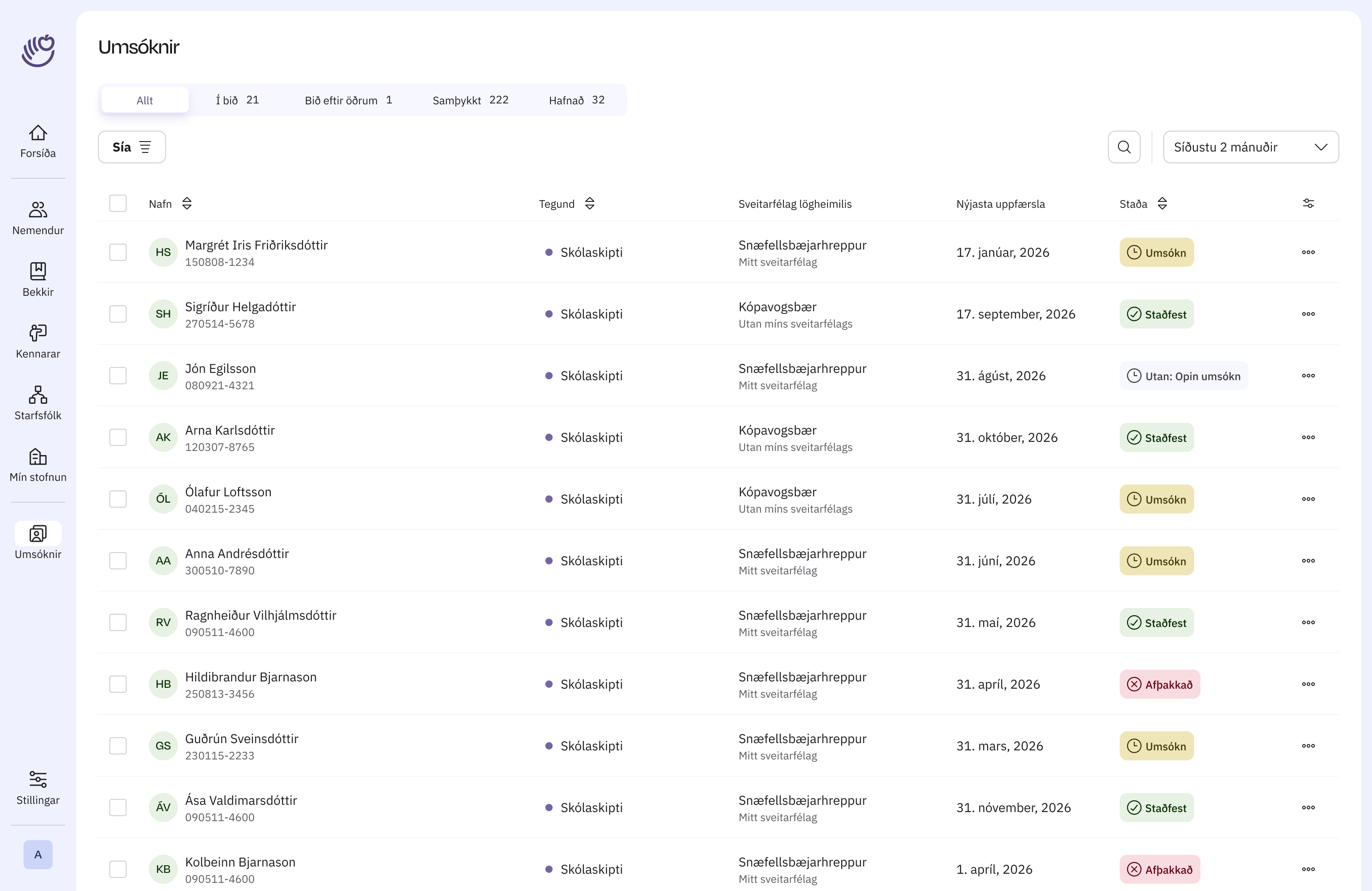
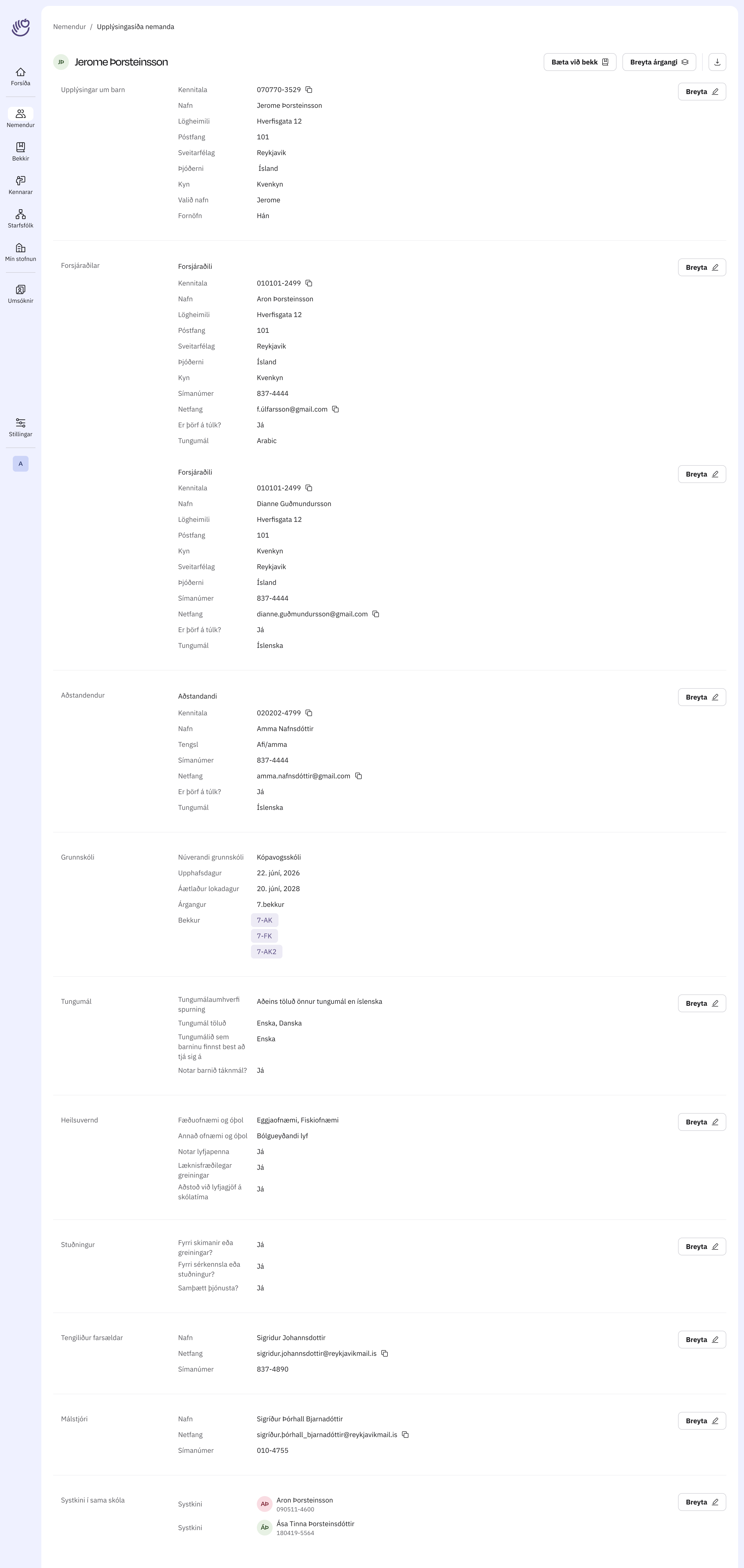
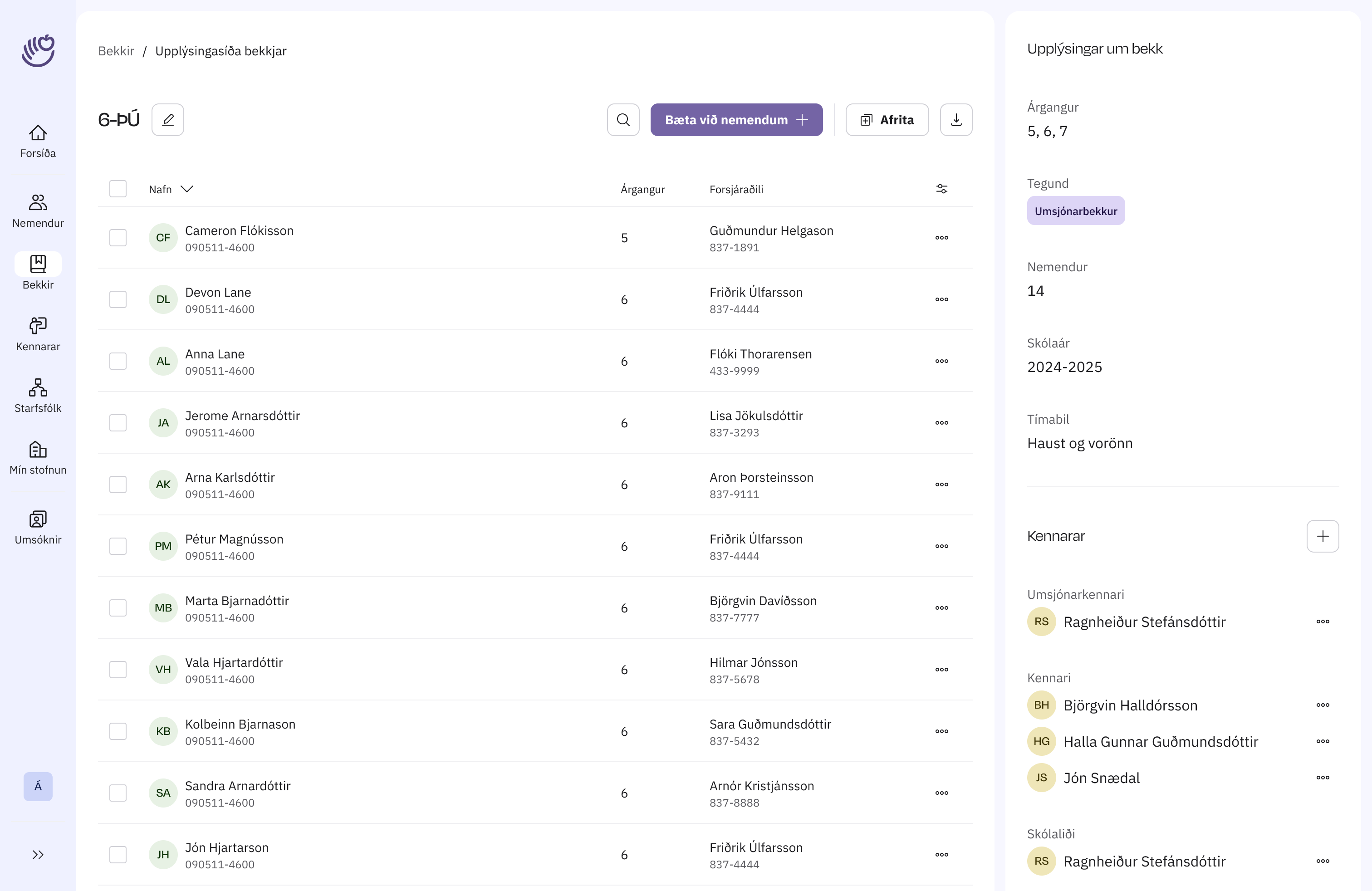
The system gives head teachers a complete overview, from pupil registration and class management to application processes and links with parents and guardians. Everything is in one interface, with clear filters and search.
Automatic sync with Þjóðskrá
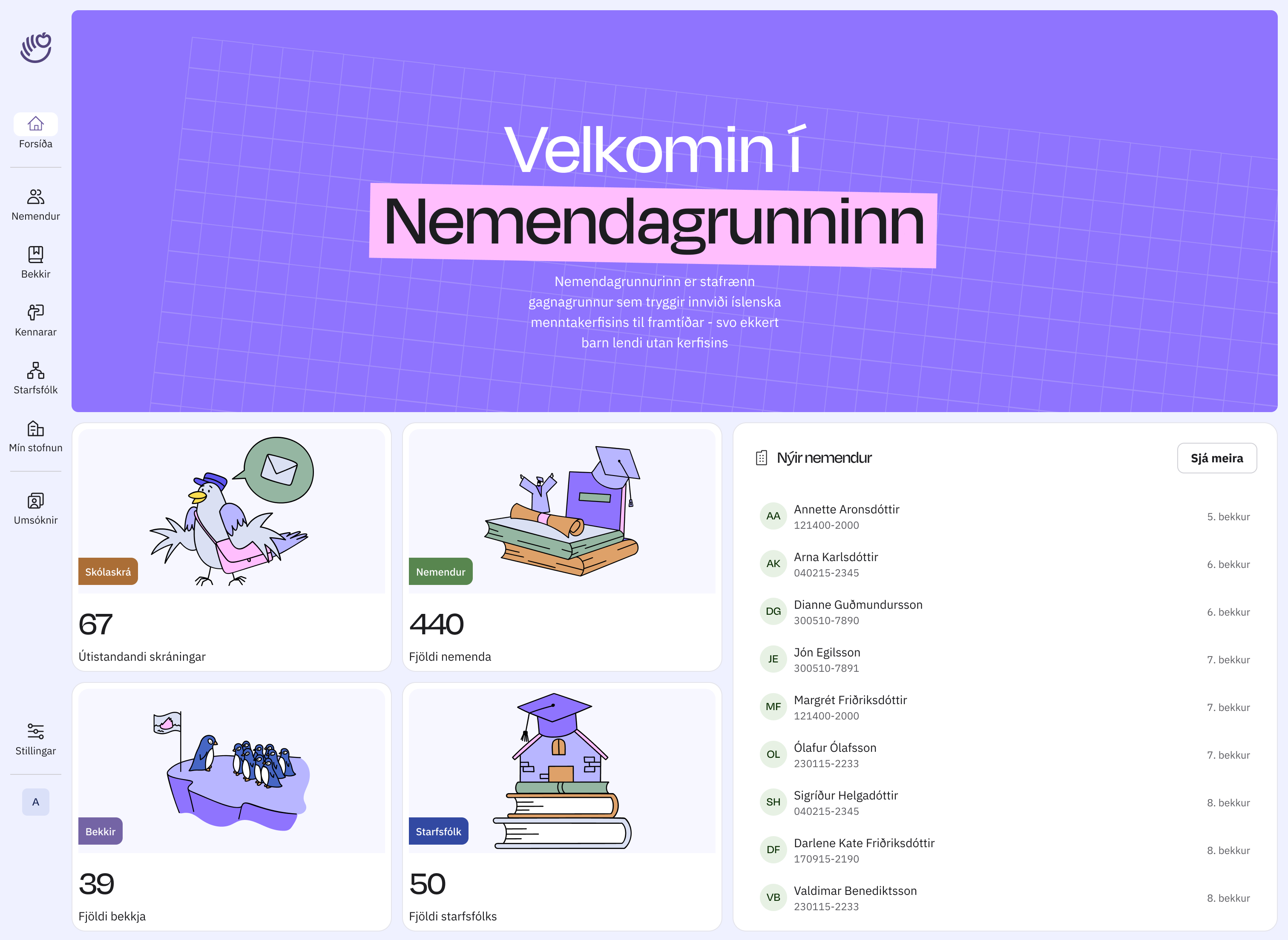
Automatic syncing with Þjóðskrá, the national registry, keeps information on pupils and their guardians up to date at all times, which cuts down on manual work and safeguards data integrity.
Finding the ‘lost children’ in fragmented systems
Before Nemendagrunnur came along, the picture in the Icelandic education system was complicated. Pupil data was stored in many different systems that barely talked to each other, if at all. This fragmentation created a real risk that children could get ‘lost’ in the system, for example when moving between municipalities, when starting school or when a national ID number was missing.
For school leaders, municipalities and ministries, this meant a great deal of manual work, countless phone calls and Excel spreadsheets in an attempt to get the full picture, and every system was different. The project therefore had two sides: building a technical solution to manage the data, and, just as importantly, untangling the political and systemic knot that comes with bringing very different stakeholders into line.
A political and technical web of stakeholders
One of the biggest puzzles in the project was getting to grips with the complex ecosystem that Nemendagrunnur has to serve. Júní had to make sure the system would meet the needs of:
MMS and the Ministry of Education and Children: Statistics and an overview to inform policy and decision-making
Municipalities: Responsible for school places and funding
Head teachers and heads of department: A day-to-day management tool for approving applications, enrolling new first-year pupils and running classes
Third parties (LMS systems): Systems such as Mentor and Námfús, which need accurate data on every pupil who should be in them
Parents: Simpler applications for changing schools and enrolment through island.is
Putting software standards to work
Instead of custom-building integrations for every single system that needs pupil data, Júní implemented the OneRoster standard from IMS Global. It's a technical approach that Júní believes belongs in more public-sector systems. By following an international standard with a solid foundation for how data on pupils, teachers and classes is stored and transferred, the project achieved three main goals:
Interoperability: Nemendagrunnur can ‘talk’ to any system, without Júní necessarily being at the wheel. This makes integrations far less complex.
No vendor lock-in: The system isn't built on proprietary, closed methods. This makes innovation easier and means the state isn't tied to a single supplier forever.
Data quality: The standard enforces consistency. What is a ‘class’? What is a ‘guardian’? OneRoster defines these, which reduces the risk of errors when systems talk to each other.
Future-proofing: Rather than being locked into proprietary solutions, the system is built on an open structure that makes new features and maintenance easier in the years ahead.
Collaboration and agility
At Júní we put a premium on transparency and close collaboration. On Nemendagrunnur, we worked closely with a team from Apró and specialists at MMS.
Our way of working came down to:
Sprints: We worked in two-week sprints, with tasks prioritised in Asana by importance.
Constant alignment: We held short daily stand-ups to review progress and sorted out snags on Slack as they came up. Each sprint ended with a demo for stakeholders, so we always knew we were on the right track.
Modern tools: Design happened in Figma, where we built a robust design system, while Notion kept track of all project documentation and GitHub took care of version control.
As digital product manager at Miðstöð menntunar og skólaþjónustu, I highly recommend Júní Digital. Our collaboration over more than a year, designing and building a national student database and an interface for the school community, has been fruitful, professional and successful. Júní has shown outstanding skill in bringing together the complex needs of public administration and user-centred solutions.
Karen María Jónsdóttir
Digital Product Manager, Miðstöð menntunar