- Client
- Hagkaup
- Our role
- Design, Development, Consulting, User experience, Project management, Implementation and operations
- Tech stack
- Figma, React, Next.js, TypeScript, Cypress, Jest, Prismic, Netlify functions
About the project and its goals
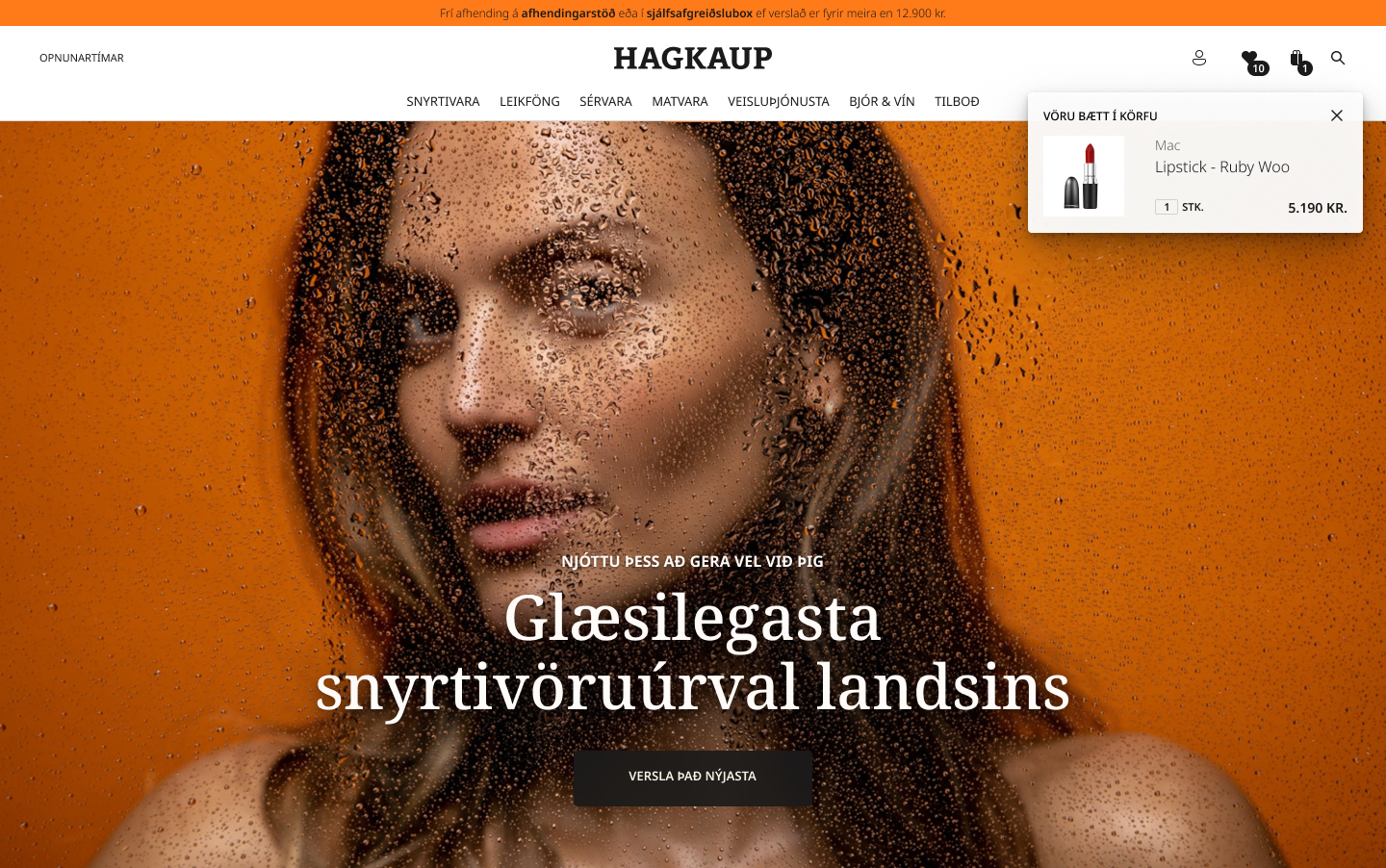
Júní handled the consulting, design and development of Hagkaup's online shop, carrying the company's new brand over to a brand-new, beautiful website.
Júní's consultants helped shape how the project was set up and run, and the consulting work included helping to staff the project, analysing data, prioritising workstreams and preparing decision meetings for management.
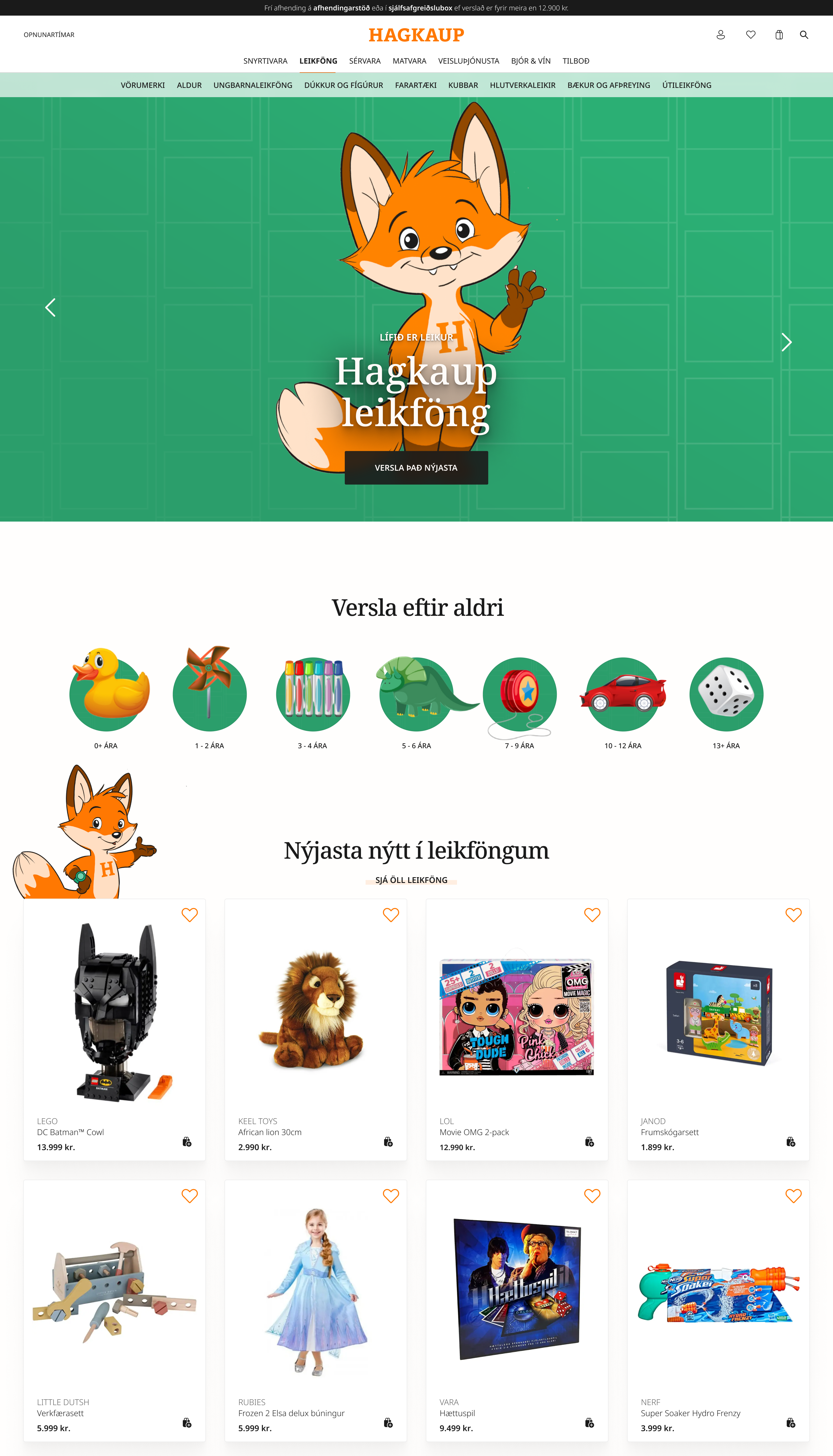
Júní's designers handled the visual design of the website and the user experience, all the way from a first visit to the website to product delivery. The focus was on simplicity, refinement and outstanding customer service. The goal was for customers to get the same great service in the online shop as they would walking into the shop itself.
Júní's developers handled the technical design and build of the website, along with the integration layers to internal systems. There was a strong focus on accessibility, search engine optimisation and performance. The website gets very irregular traffic, partly because of marketing campaigns, so a lot of emphasis was placed on automated scaling to keep the system stable.
Users first
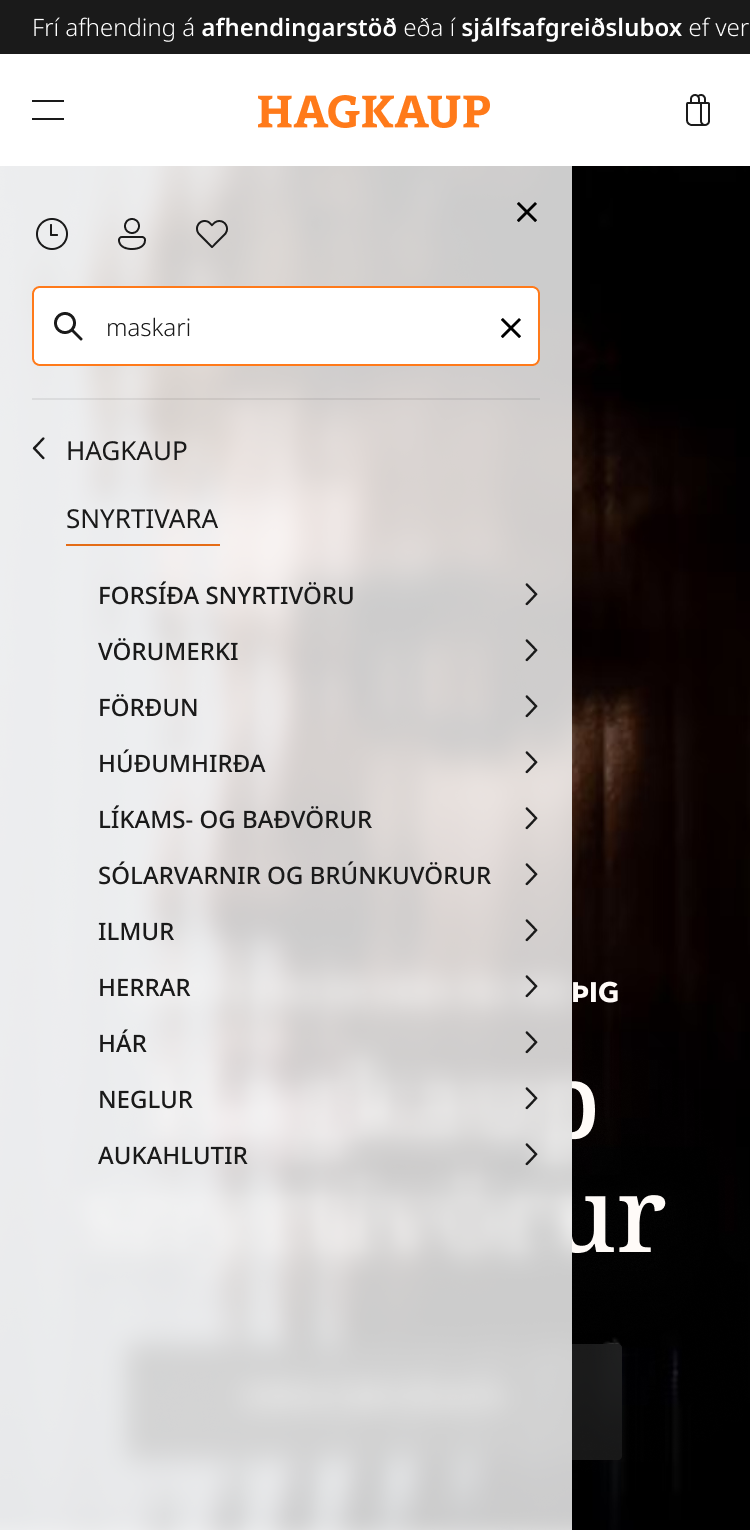
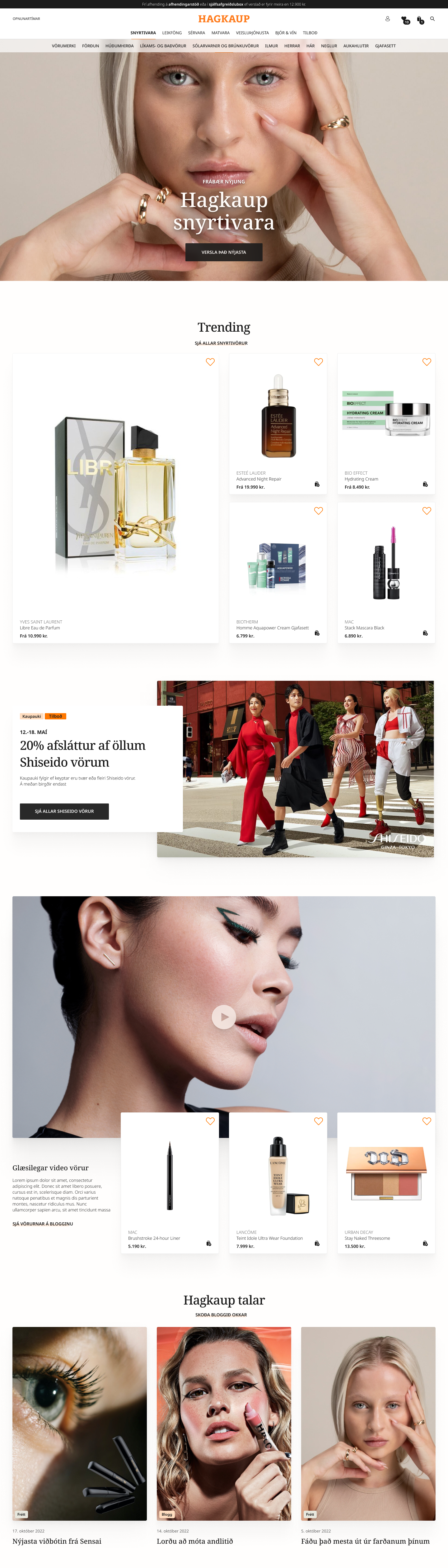
When developing Hagkaup.is/snyrtivara, Hagkaup's beauty shop, we carried out user research right at the start of the project, looking closely at the kinds of users we were designing for. The findings shaped the design of the website, and a lot of effort went into making it as simple, efficient and beautiful as possible for its users.
During development, users were brought in for usability tests where they talked us through their experience of the online shop, and the findings were then used to make it even better. Users contributed an enormous amount to this project, and plenty was added or changed for the better after those conversations. The online shop has been widely praised for its simplicity and efficiency.
We have worked with Júní for many years on a wide range of large digital projects across the Hagar group, including the Takk app, hagkaup.is, olis.is and bananar.is, as well as other apps. Júní has worked on the architecture of our technical environment, user-centred design of websites and apps, and consulting and project management. Júní has proven to be a solution-focused and flexible partner that keeps the bigger picture in view and builds solutions that last. They understand users' needs and expectations while staying aware of how complex the infrastructure behind digital solutions in a business can be. We can therefore wholeheartedly recommend them as a good and reliable partner.
Eiður Eiðsson
Director of Digital Development and IT, Hagar
Challenges
The biggest challenge in building the website was connecting it to all the underlying systems and warehouses, and a great deal of effort went into getting that work right, with a cross-functional team of specialists for each system. The project was run as an accelerator, where business and tech teams work towards a shared goal within a fixed timeframe. From a systems point of view, the Hagkaup website gets very unpredictable traffic. This is partly because marketing campaigns create spikes, and discount days put a heavy load on the system.
With that unpredictable traffic in mind, we decided to host the front end on Netlify. Netlify handles automatic scaling and the CDN, and caches frequently used files such as Next.js cache files. We also used a middle layer that connects the front end to the necessary back-end systems. It is hosted on Netlify Functions (AWS Lambda), an approach that gives us flexibility in scaling individual endpoints. On top of that, we maintain locked-down test environments and automated release pipelines for every environment, which test, document and release changes automatically once stakeholders have approved them. This setup has served us well, and the client has been very happy with the result.